(thanks to the publisher Funko Games for taking this really nice promo picture)
This is about a board game that came out a few years ago called Rear Window.
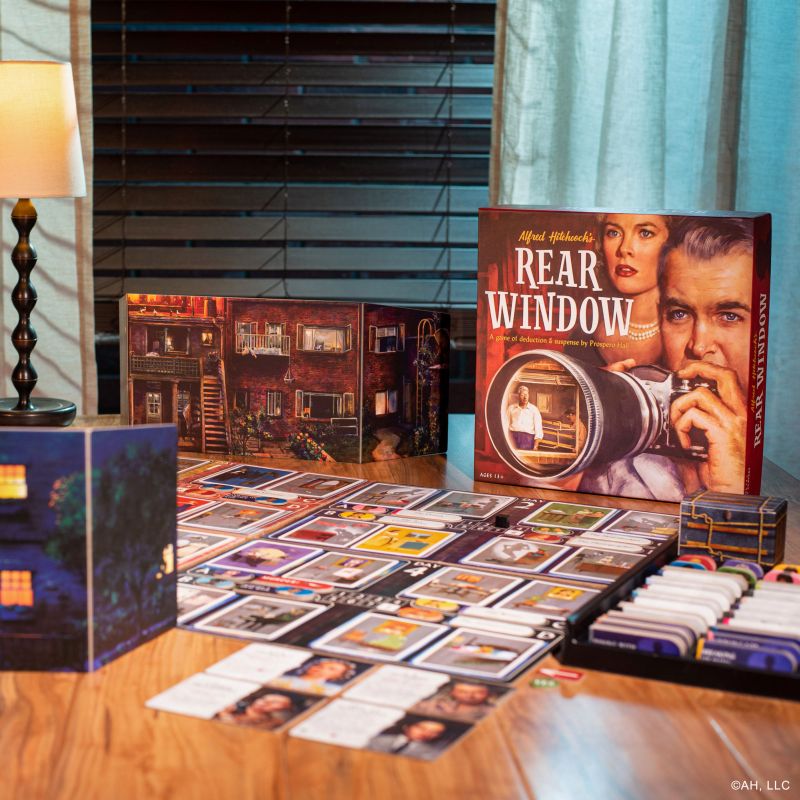
Have you ever been wrong, like really wrong? For the first time in my life I am. Rear Window changed the way I look at an entire genre of board games. That genre is communication games. One player places cards out to communicate information to the other players. To say there’s a clock, they might put out a bed and some electricity. Because alarm clocks wake people up and there's electricity in clocks. And it's up to the rest of the players to decode that logic correctly. And I used to think that was at it's core not fun. But Rear Window really shook things up for me. Where other games in the genre zig, Rear Window zags. It challenges every assumption and reengineers the genre from first principles. Looking at this game must have been what classical painters thought when they saw Van Gogh. Ok maybe not that crazy but I think you get my point.
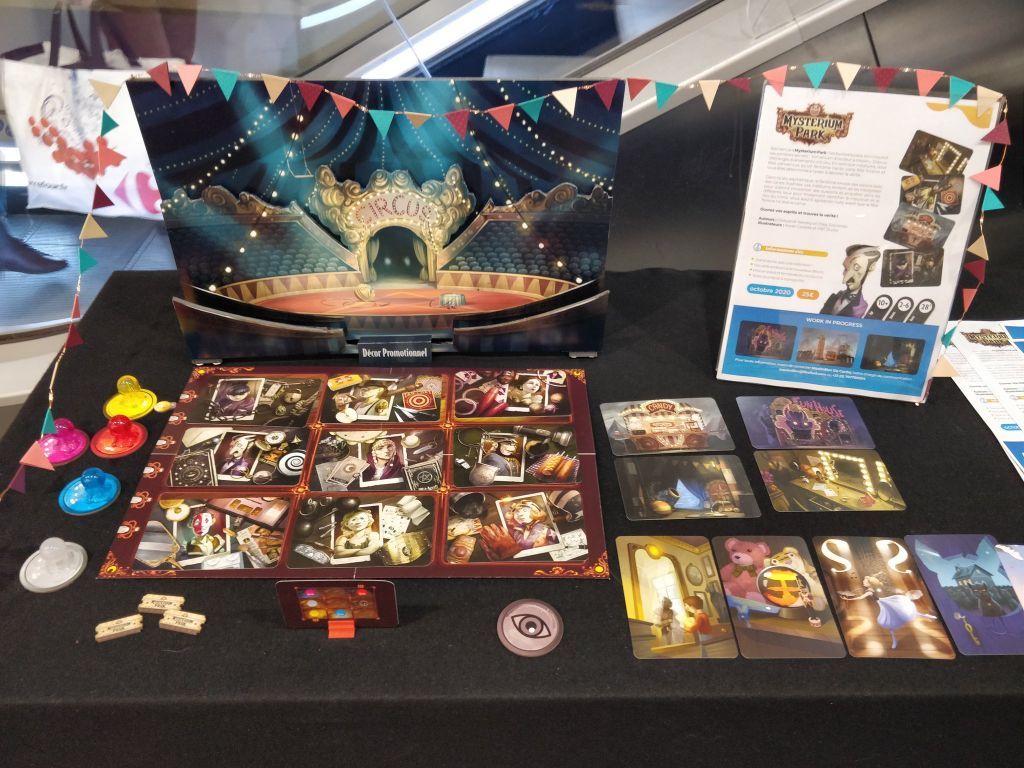
The most popular game in this subgenre is probably Mysterium. And honestly, to me the game always felt very sluggish. The cards in this game are intentionally very complicated. There’s a million little details on these cards and they don’t share a common theme. When I played Mysterium it often felt like a crapshoot whether my audience would correctly guess the info. Sometimes the players would understand what I meant, but just as often the players would hyperfocus on some small detail I didn’t intend and the whole game would be lost.
Looking back at that clock example. The director put out the electricity and the bed. Except the electricty card has handcuffs, and now the audience are completly off track because they've decided to hyperfocus on the handcuffs. No matter what I do there’s things to distract my audience.
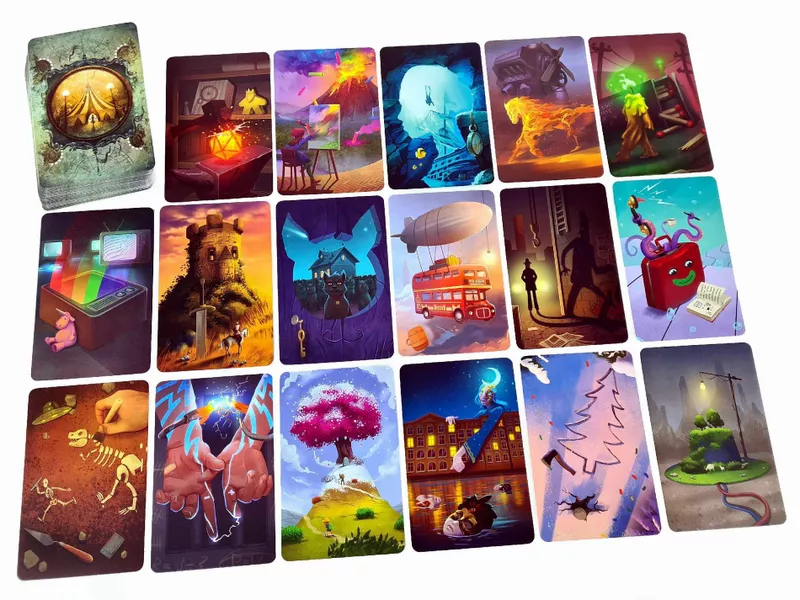
I assume this frustration was intentional. The designers assume that if the cards were easy to use there’d be no game. That makes sense, but for me it was never FUN. It was like handing me crayons and asking me to make a crossword. These tools are just frustrating. Here's Rear Windows first big departure: look at these cards!
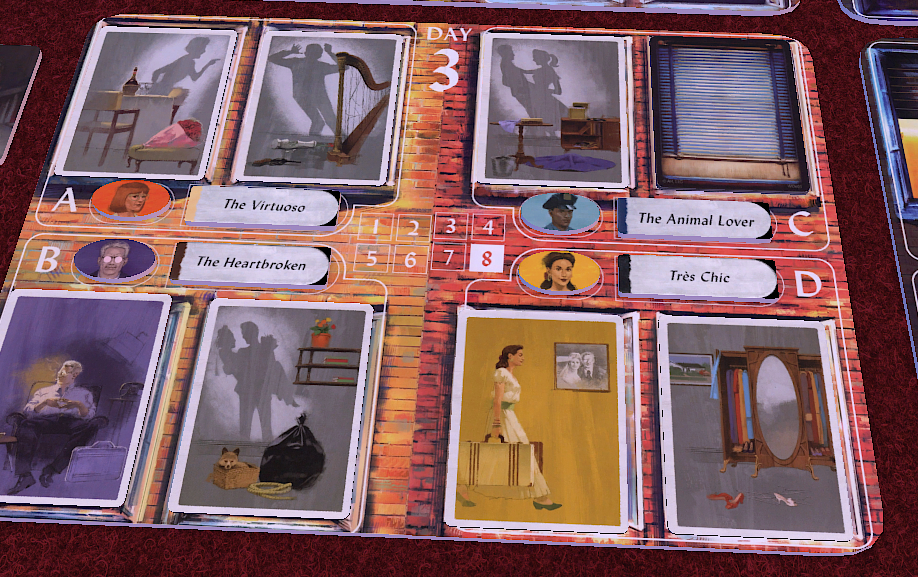
Need to reference the yellow lady? There she is! Need to say something about a musician? Look at all those instruments! Mysterium in the same position would've just throw you cards with MC Esher Stairs, the Necronomicon, and a plant growing human heads and say "Figure it out champ!" These easy cards give Rear Window a smooth foundation to build off of. Or if you prefer a movie metaphor, it's a nice clean set to film your movie with. The simple cards means Rear Window asks you convey a lot more information than Mysterium. Players need to guess 4 characters, in 4 rooms, doing 4 activities. And you don't have many cards to do it with. The director just makes a lot more interesting decisions about where to put their best clues.
The director isn’t the only one with these interesting gamey decisions to make, the audience does as well. The audience has these once-per-game powers. So while the audience tries to unpick the director’s logic, sprinkled in are moments of “do we want to use this power now or later” “do we think this is the best time for the power?” “Which card do we use the power on?” These are concrete mechanical decisions sprinkled into the more ethereal discussion about what the heck the director is getting at with these clues. That’s Rear Window’s secret. Arguing about the director’s weird logic is still in the game, but it’s paced out between more concrete mechanical decisions. Like any good movie, pacing is important. A whole game about nothing but wibbly-wobbly logic chains would get old fast.
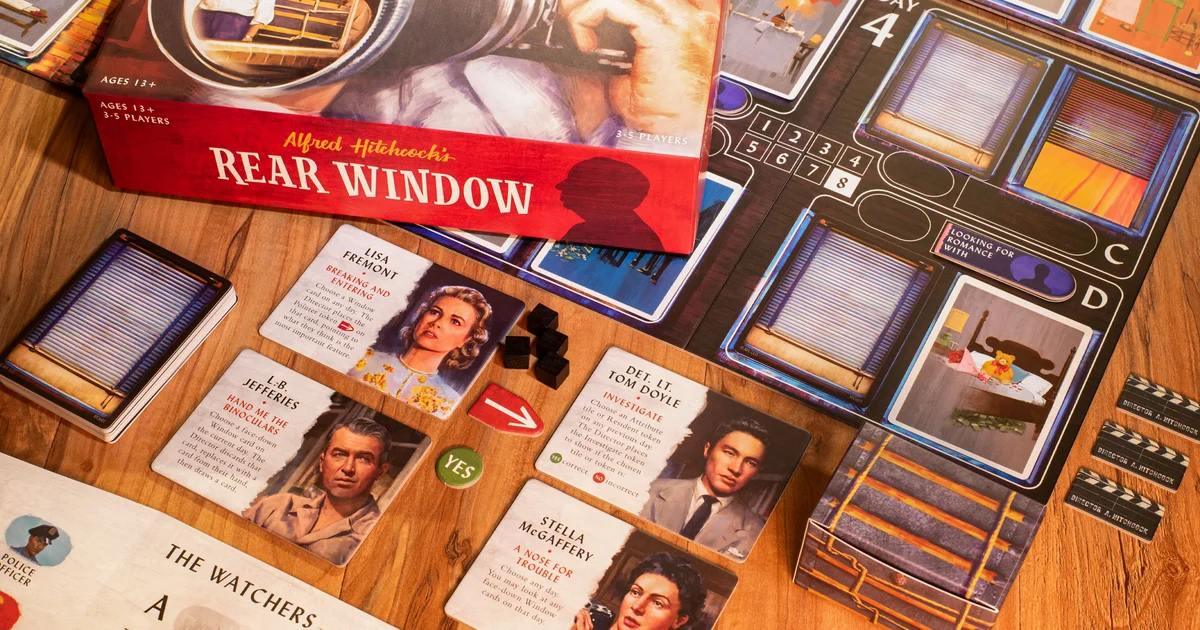
And these player powers have some sauce to them. The coolest is this arrow token. The audience chooses a card and the director places the arrow wherever they want on the card. First off I havn’t seen this type of power in any game of this genre before, which is crazy because it feels like it really plays to the genre’s strengths. And honestly, this power has so many interesting uses. Every game there's lots of debate on when and where is best to use this power. Use it early to lock in some info? Save it for the end when you'll need it most? Which clue do you use it on? Which cluse are you most unsure about? One time my players argued for 5 minutes about which clue to use the arrow power on. And once they decided I placed the arrow on the card, and all the players looked down at it, then back up at me and said "That doesn't help at all." And we burst out laughing. It’s so juicy. The other once/game powers are really cool too.
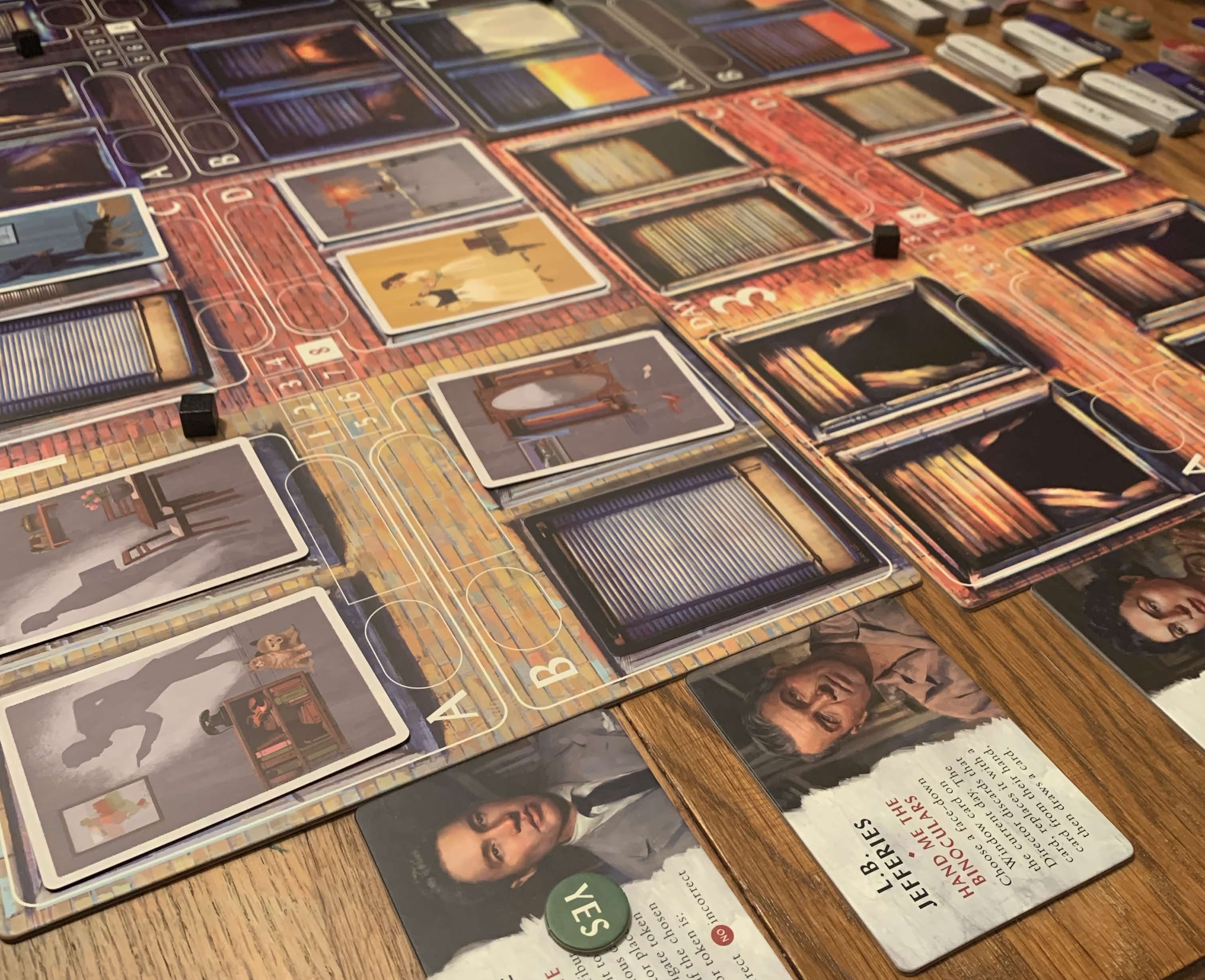
This wouldn’t be a game about film without a really cool twist at the end. That is, in this cooperative game, it's possible that the director, the person giving you all the clues, actually might be working against you! The way this works is that in about one-third of games, a murderer is in one of the rooms. That means the director actually needs to keep secret whats in that room, while still giving correct information about the other rooms. If the director keeps the twist secret until the end of the game, they win. If the audience correctly guesses the twist and finds the killer the audience wins. This game is 100% cooperative most of the time, but sometimes a killer shows up and the game becomes 100% audience vs director. Only one team can win.
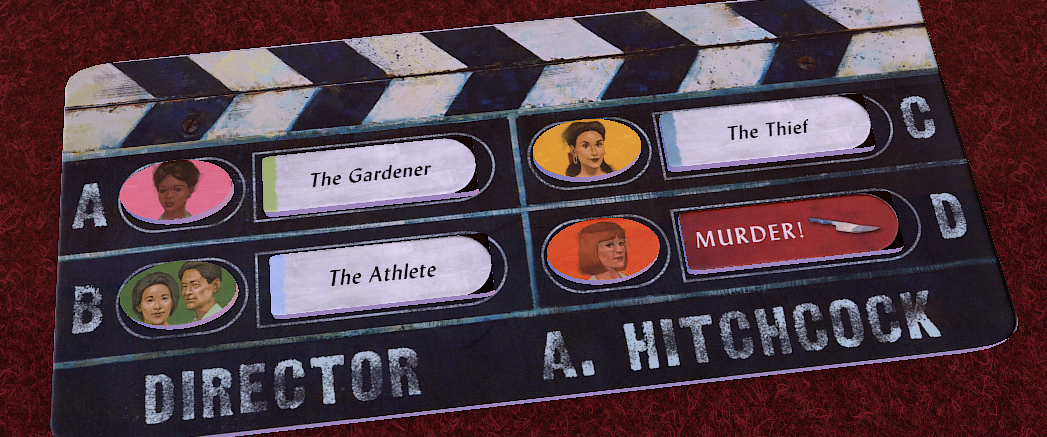
On paper this rule feels like it wouldn’t work. How is the audience supposed to guess there’s a murder if the director doesn’t want to tell them? Well, have you ever seen a murder mystery? It’s never one clue that gives it away, it’s lots of little clues that all line up. The most obvious hint is the director doesn't give good cards for one of the rooms. The director probably did that to not waste their precious cards on it. But there’s a ton of other smaller things the audince will look for too. Reader you might just have to trust me when I say this mechanic plays great. And it's another little mechanical thing to break up the crazy logic untying the genre is known for.
We really are living in a golden age of party games. Gone are the days of pictionary's tyrannical rule. Every year more cool party games are coming out that don't involve drawing pictures or miming actions. What a great time to be a party game player. So Clover, Decrypto, Don't Get Got, 2 Rooms and a Boom. All really simple games that are just really fun. Honestly Rear Window is on the more complex end of that list I just mentioned. If you wanted you could probably throw out the murderer module and the game will still play great. But for me the murderer being a possibility makes every game so much more juicy to play. But the core is still great. Taking Mysterium's awkward cards, replacing them with easy to use cards, and then asking the director to communicate way more information was a genius move, and the player powers give everyone interesting things to discuss in-between all the logic unraveling.
I'll end this by giving a shout-out to my Ukrainian friend, living in Wales, visiting me on vacation in Serbia who gave me this game so I could bring it back to America. At time of writing I could only find really expensive copies of this game in the US, but for whatever reason there’s plentiful copies in the UK.
